



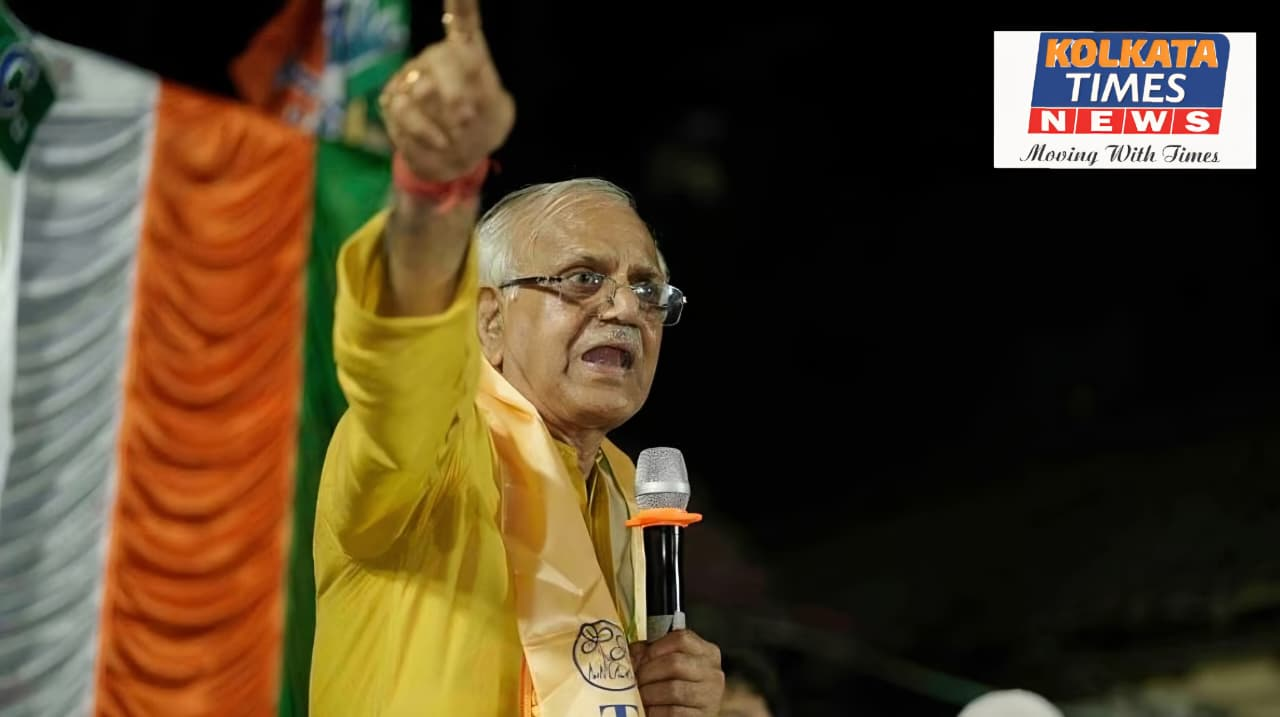
The political landscape in Kolkata has witnessed a surge of volatility, with the Trinamool Congress (TMC) finding itself at a critical crossroads. Following the recent assembly elections, in which the party secured 80 seats within the 294-member West Bengal Legislative Assembly, internal fissures have begun to emerge. Amidst mounting speculation regarding a potential split and the destabilization of the opposition, senior TMC leader Sobhandeb Chattopadhyay stepped forward on Tuesday to dismiss rumors of a large-scale rebellion, asserting that the vast majority of party legislators remain unwavering in their loyalty to former Chief Minister Mamata Banerjee.
Internal Dissent and the Kolkata Hotel Meetings
The atmosphere in Kolkata has been heavy with political chatter for several days. Reports of secret meetings involving dissident legislators at a city hotel and the MLA Hostel have fueled intense speculation. Observers and political circles have been abuzz with theories that anywhere between 20 and 50 TMC MLAs might be in communication with a dissident camp. This group is allegedly operating under the influence of expelled MLA Ritabrata Banerjee. These developments have brought the TMC to its most precarious position since its formation, drawing comparisons to political crises seen elsewhere in the country where regional parties faced existential threats due to internal fractures.
Sobhandeb Chattopadhyay’s Stance on Unity
Seeking to mitigate the impact of these rumors, Sobhandeb Chattopadhyay held a press conference to provide clarity on the party's internal cohesion. He acknowledged that while political pressure is high, the foundation of the party remains solid.
"There may be a few individuals who succumb to pressure, but there is no fear that a large rebellion will take place," Chattopadhyay stated firmly. He emphasized that the "old guard" of the Trinamool Congress continues to exercise firm control over the organization. According to Chattopadhyay, the party’s symbol—the 'jora ghas phool' (twin-flower)—remains synonymous with Mamata Banerjee’s leadership, and he expressed confidence that the majority of the 80 elected MLAs would continue to uphold their commitment to her.
Allegations of Coercion and Financial Inducements
Beyond the internal dynamics, Chattopadhyay leveled serious allegations against the ruling government, suggesting that the current instability is not merely organic. He alleged that efforts are being actively pursued to weaken the opposition through systematic coercion and financial inducements.
"Under intense pressure from the ruling government, some people are being compelled to make statements about forged signatures. There are some who are trying to go against the TMC as the ruling party is pumping money," he remarked. Chattopadhyay assured that the party leadership is monitoring the situation around the clock to safeguard its members from external manipulation.
The Forgery Row in Kolkata Assembly
A significant catalyst for this ongoing turmoil is the dispute surrounding the appointment of the Leader of the Opposition (LoP). The controversy centers on a letter submitted to the Assembly Secretariat that purportedly carried the signatures of 70 TMC MLAs endorsing Sobhandeb Chattopadhyay for the position.
The situation escalated when allegations emerged that several signatures on this document were forged. The Assembly Secretariat noted discrepancies, such as signatures being written in block letters, which deviated from the official signatures provided by the MLAs during their swearing-in ceremonies. This led to a formal police complaint and an subsequent probe by the West Bengal Criminal Investigation Department (CID).
The political fallout was swift. On Monday, the TMC expelled two MLAs—Ritabrata Banerjee and Sandipan Saha—accusing them of "anti-party activities." Chief Minister Suvendu Adhikari had earlier held a press conference, revealing that these two legislators had approached the Speaker to lodge complaints regarding the alleged signature forgery. The TMC leadership, including spokesperson Kunal Ghosh, contended that these members should have addressed their grievances internally with Mamata Banerjee rather than escalating the issue to the Speaker, which the party viewed as a betrayal of the public mandate.
Mamata Banerjee’s Counter-Offensive
The tension is further compounded by a video message released by Mamata Banerjee on Monday. In her address, she explicitly accused the Bharatiya Janata Party (BJP) of attempting to fracture the TMC through a campaign of intimidation and illicit financial tactics. Her message was aimed at rallying the party faithful and reinforcing the narrative that the current dissent is an external project rather than a genuine ideological shift within the TMC.
Future Outlook and Political Implications
As Kolkata remains the epicenter of these political machinations, the coming days will be critical. The CID’s investigation into the signature forgery case continues to cast a shadow over the LoP nomination. With the party having already expelled two members, the leadership has signaled a "zero-tolerance" policy toward dissent.
Whether this firm stance will successfully deter further defections remains to be seen. For now, the TMC’s strategy is clear: focus on party unity, portray the dissenters as compromised by external influence, and rely on the enduring popularity of Mamata Banerjee to weather the storm. As the legislative session progresses, the ability of the party to maintain its numbers and internal discipline will define its role as the primary opposition force in West Bengal.
image source : https://www.newindianexpress.com
 Continue With Google
Comments (0)